
Outstanding Articles
ICG clearance test based on photoacoustic imaging for assessment of human liver function reserve: An initial clinical study

Liver function reserve (LFR) plays an extensive and important role in patients with liver disease. Indocyanine green (ICG) clearance test is the standard diagnostic approach for LFR evaluation which was performed by spectrophotometry or pulse dye densitometry (PDD). Spectrophotometry is the gold standard, it's invasive and not real-time. PDD is non-invasive, but accuracy of PDD is controversial. Taken spectrophotometry as the reference standard, this study investigated the accuracy of photoacoustic imaging (PAI) method for LFR assessment and compared to PDD in healthy volunteers. The results demonstrated a strong correlation between PAI method and spectrophotometry (r = 0.9649, p < 0.0001). No significant difference was shown in ICG clearance between PAI and spectrophotometry method (rate constant k1 vs. k2, 0.001158 +−0.00042 vs. 0.001491 +- 0.00045, p = 0.0727; half-life t1 vs. t2, 601.2 s vs. 474.4 s, p = 0.1450). These results indicated that PAI may be valuable as a noninvasive, accurate diagnostic tool for LFR assessment in human.

2023-05-31

Photoacoustics

West China Hospital, Sichuan University

Structural basis of BAM-mediated outer membrane β-barrel protein assembly

The outer membrane structure is common in Gram-negative bacteria, mitochondria and chloroplasts, and contains outer membrane β-barrel proteins (OMPs) that are essential interchange portals of materials1,2,3. All known OMPs share the antiparallel β-strand topology4, implicating a common evolutionary origin and conserved folding mechanism. Models have been proposed for bacterial β-barrel assembly machinery (BAM) to initiate OMP folding5,6; however, mechanisms by which BAM proceeds to complete OMP assembly remain unclear. Here we report intermediate structures of BAM assembling an OMP substrate, EspP, demonstrating sequential conformational dynamics of BAM during the late stages of OMP assembly, which is further supported by molecular dynamics simulations. Mutagenic in vitro and in vivo assembly assays reveal functional residues of BamA and EspP for barrel hybridization, closure and release. Our work provides novel insights into the common mechanism of OMP assembly.

2023-04-30

Nature

West China Hospital, Sichuan University

More+
Journal

Molecular Biomedicine | Profiling chromatin regulatory landscape: insights into the development of ChIP-seq and ATAC-seq

2020-10-10

Open the phone and scan

The chromatin regulatory landscape is a high-level annotation on the biological function of chromatin that combines histone modifications, transcription factor binding, and the regulatory function of genomic elements. To throughly understand the interaction of these components, researchers have developed various epigenome sequencing technologies,such as ChIP-seq and ATAC-seq. Here, prof. Yongyou Zhang provided a detailed discussion of the development of ChIP-seq & ATAC-seq and their current applications in scientific research. 


Chromatin regulatory landscape plays a critical role in many disease processes and embryo development. Epigenome sequencing technologies such as chromatin immunoprecipitation sequencing (ChIP-seq) and assay for transposase-accessible chromatin with high-throughput sequencing (ATAC-seq) have enabled us to dissect the pan-genomic regulatory landscape of cells and tissues in both time and space dimensions by detecting specific chromatin state and its corresponding transcription factors (Fig. 1).


Pioneered by the advancement of chromatin immunoprecipitation-chip (ChIP-chip) technology, abundant epigenome profiling technologies have become available such as ChIP-seq, DNase I hypersensitive site sequencing (DNase-seq), ATAC-seq and so on. The advent of single-cell sequencing has revolutionized the next-generation sequencing, applications in single-cell epigenetics are enriched rapidly. Epigenome sequencing technologies have evolved from low-throughput to high-throughput and from bulk sample to the single-cell scope, which unprecedentedly benefits scientists to interpret life from different angles. In this review, after briefly introducing the background knowledge of epigenome biology, we discuss the development of epigenome sequencing technologies, especially ChIP-seq & ATAC-seq and their current applications in scientific research. Finally, we provide insights into future applications and challenges.
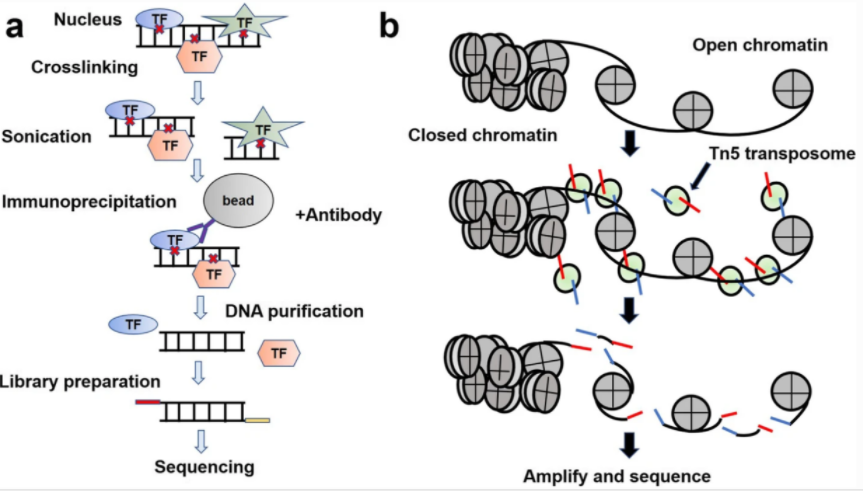

Fig. 1 Workflows of ChIP-seq and ATAC-seq.


Website for Molecular Biomedicine: https://www.springer.com/journal/43556
Looking forward to your contributions